 EN

Standard vs. Rush Calendar Printing Timelines
Baseline production schedule for mass 2026 calendar printing
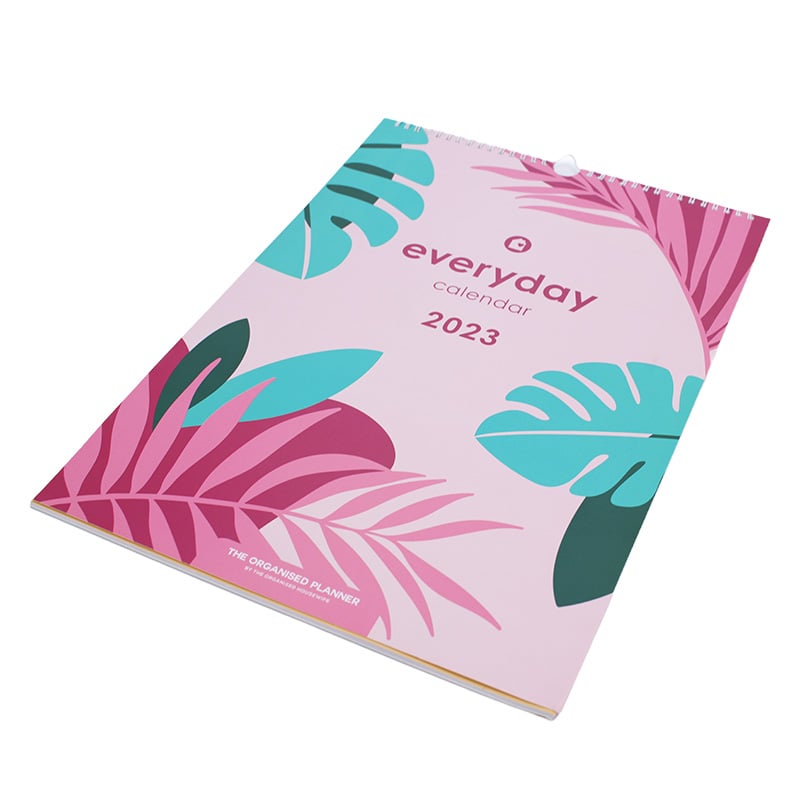
For mass 2026 New Year calendar printing, a realistic baseline separates pre-press and physical production. After artwork approval, most offset runs take 2–3 weeks for printing—depending on quantity, page count, and finishing options like wire-o binding, saddle stitching, or drilling. Proofing adds 2–4 business days; cutting, collating, binding, and packing require another 3–5 days. Shipping is separate: domestic ground typically takes 3–7 business days, while international sea freight can add 4–6 weeks.
A proven planning path is to finalize design and secure quotes in July–August, approve proofs in September, print and bind in October, and ship in November. This buffer mitigates risks like paper stock shortages, dye-lot variations, and freight delays—factors that tightened lead times across 2024–2025. For large wall calendars (A3, A4, or 12" x 12"), pairing a heavier cover stock with lighter inner pages balances durability and cost-effectiveness. Regional production slowdowns—especially during October holidays and year-end closures—further reinforce why early order placement remains the strongest safeguard for on-time delivery.
Rush calendar printing options: Trade-offs in speed, quality, and cost
Rush calendar printing compresses physical production to 5–10 business days, with some digital short-run providers delivering printed, bound, and shipped calendars in as few as 3–5 days for smaller quantities. But speed comes with multidimensional trade-offs. Digital printing eliminates plate-making and accelerates setup, yet may deliver slightly less vibrant color saturation or inconsistent solid coverage compared to offset—particularly noticeable on large-format wall calendars or high-coverage designs.
Binding options are often limited under rush timelines: saddle stitching and plastic coil remain widely available, but premium finishes like wire-o or sewn binding may be unavailable. Labor overtime, expedited materials, and air freight drive cost increases of 20–50% over standard pricing, per 2025 industry benchmarks. Quality assurance steps—including trim verification, color calibration, and binding strength checks—are frequently compressed, raising the risk of misalignment, color drift, or hinge failure.
Rush capacity makes strategic sense only when tied to immovable deadlines: retail launch windows, time-bound corporate gifting programs, or event-specific promotions. For most 2026 New Year calendars, the prudent approach is to reserve rush services for top-up orders or final proof validation—keeping primary volume on a standard timeline to ensure consistency, cost control, and reliability.
Strategic Timing for 2026 New Year Calendar Distribution
Aligning calendar printing completion with retail and corporate gifting deadlines
Calendar printing schedules must be built backward from two distinct distribution milestones: retail shelf readiness and corporate gift handover. Most corporate buyers require branded calendars in hand by the first full week of December 2025—before holiday office closures begin. Retail buyers typically need stock ready for display by mid-November 2025 to capture early seasonal traffic.
Working backward from those dates reveals little margin for delay. Ground shipping and regional distribution commonly consume 5–10 business days. Production, binding, and packing require another 10–15 days. Proofing and cross-departmental artwork approvals add 3–5 days—especially when marketing, legal, and executive stakeholders are involved. That means final print-ready files should be submitted by late September or early October 2025 for standard production. A 2024 industry planning review found that 78% of successful corporate calendar programs locked final artwork no later than the first week of October. Delayed approvals consistently trigger higher rush fees or force compromises on delivery windows. Establishing internal sign-off milestones—for artwork, paper stock selection, and packaging specifications—is one of the most effective ways to maintain schedule integrity.
Regional Q3–Q4 2025 print deadlines for global 2026 calendar distribution
Global distribution demands earlier deadlines due to ocean freight, customs clearance, and multi-tier logistics. Regional planning must account for local production capacity, port congestion, and destination-specific lead times. The table below reflects recommended file submission windows for major markets, based on verified 2024–2025 shipping benchmarks and standard 10–15-day in-plant production.
| Region | Recommended file submission | Key logistics factor |
|---|---|---|
| North America | September 15–30, 2025 | Domestic ground shipping and retail reset schedules |
| Europe | September 20–October 5, 2025 | Cross-border trucking and holiday workforce availability |
| Asia-Pacific | August 25–September 15, 2025 | Longer ocean freight and regional distribution hubs |
| Middle East & Africa | September 1–15, 2025 | Customs processing and limited local print capacity |
These windows assume no major artwork revisions after submission. Any change post-approval risks pushing delivery into late December 2025—when many corporate offices are closed and retail promotional space is already allocated. Companies distributing across multiple regions should prioritize the longest-lead destination first, using its deadline as the anchor for all other planning.
End-to-End Calendar Printing Workflow and Lead Times
Accurate calendar printing lead times depend on a controlled sequence—from approved artwork to sealed cartons. The stage-by-stage benchmarks below reflect a standard 5,000-unit offset run during 2024–2025 production cycles, excluding freight.
Stage-by-stage breakdown: Proofing, printing, binding, and packing (2024–2025 benchmarks)
Proofing serves as the first critical gate. File review, color validation, imposition, and client approval typically take 2–3 days. Plating and paper sourcing add 3–5 days—especially when specialty stocks or custom covers require mill coordination. Actual printing of inner pages and covers then runs 3–5 days, assuming no last-minute artwork changes.
Binding and finishing often create the longest pause. Drying, adhesive curing, spiral insertion, or hardcover casing require 5–7 days; rushing this phase risks warped pages, weak hinges, or scuffed coatings—issues that compromise both function and brand perception. Quality control and packing close the process in 2–3 days, including random pull tests and carton labeling.
| Stage | Typical Lead Time |
|---|---|
| File review and proofing | 2–3 days |
| Plating and paper sourcing | 3–5 days |
| Printing: inner pages and covers | 3–5 days |
| Drying and binding | 5–7 days |
| QC and packing | 2–3 days |
| Total in-plant lead time | 3–4 weeks |
These benchmarks assume a complete, print-ready file. Missing bleeds, low-resolution logos, or delayed proof approvals extend timelines significantly—each correction restarts prepress validation. Always plan for total in-plant time plus freight, and add an additional buffer for regional holidays and port congestion during Q3–Q4.
File Submission Best Practices to Protect Your Calendar Printing Schedule
Submitting clean, print-ready files is one of the most controllable levers to prevent delays in mass 2026 calendar printing. Save final artwork as PDF/X-1a—the industry-standard format that preserves fonts, images, and layout integrity while minimizing device-specific rendering errors. Set image resolution to at least 300 dpi at final trim size; low-resolution assets are the leading cause of pixelation and re-upload cycles. Outline or embed all fonts, and confirm linked images are embedded or included in the package.
Before uploading, run a digital preflight check to catch missing fonts, RGB color spaces, incorrect bleed settings, or unembedded images—errors that otherwise trigger multiple revision rounds. If your printer provides downloadable calendar templates, use them to align spine width, binding margins, and trim dimensions from the outset. Finally, always proof a single digital or hard-copy sample before approving the full run. This step may add minimal front-end time—but it prevents costly rework, material waste, and missed distribution deadlines that far outweigh any initial time investment.
FAQ
What is the typical lead time for standard calendar printing?
Standard calendar printing, including proofing, printing, binding, and packing, typically takes around 3–4 weeks.
When should I submit my final artwork for 2026 calendar printing?
Final artwork should be submitted by late September or early October 2025 to meet standard production and distribution deadlines.
What are the main trade-offs for rush calendar printing?
Rush printing offers faster production times (5–10 business days) but may come with higher costs (20–50% more than standard pricing) and potential compromises in print quality and binding options.
How can I ensure my design files are print-ready?
Save your artwork as a PDF/X-1a format, with 300 dpi resolution, all fonts embedded or outlined, and linked images included. Run a preflight check before submission.
What are the key factors impacting international calendar distribution?
Key factors include ocean freight duration, customs clearance, port congestion, and regional distribution lead times, all of which necessitate earlier artwork submission deadlines.
Table of Contents
- Standard vs. Rush Calendar Printing Timelines
- Strategic Timing for 2026 New Year Calendar Distribution
- End-to-End Calendar Printing Workflow and Lead Times
- File Submission Best Practices to Protect Your Calendar Printing Schedule
-
FAQ
- What is the typical lead time for standard calendar printing?
- When should I submit my final artwork for 2026 calendar printing?
- What are the main trade-offs for rush calendar printing?
- How can I ensure my design files are print-ready?
- What are the key factors impacting international calendar distribution?