 EN

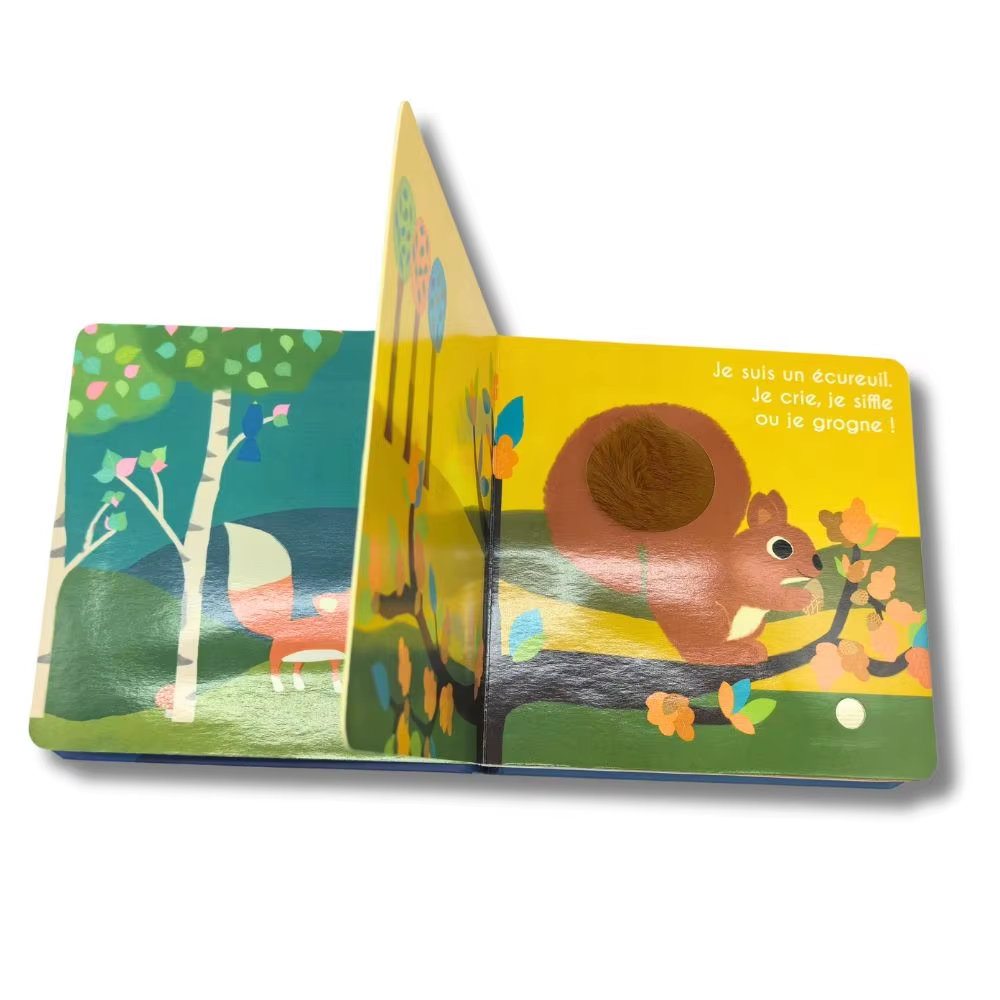
Technical Feasibility of Embedding Sound Modules in a Custom Book
Core Technologies: Flexible Circuits, Button-Activated Chips, and Low-Power Audio ICs
Embedding sound modules in a custom book relies on three integrated technologies: flexible printed circuits (FPCs), button-activated audio chips, and low-power audio ICs. FPCs enable conductive traces to flex with page turns without cracking—critical for durability in board books. Membrane-style switches respond to light press force, offering reliable tactile activation beneath printed icons. Audio ICs are available with pre-programmed memory capacities ranging from 6 seconds to several minutes; longer durations require larger flash memory and increase per-unit cost. WAV or MP3 files are loaded during production—typically in batches of 500 within 2–3 hours—and post-programming edits cost $0.10–$0.30 per module (2023). High-fidelity WAV is preferred for educational language content, where sampling rate directly impacts pronunciation clarity. Low-power ICs support coin-cell or AAA batteries, while miniature piezoelectric speakers minimize added thickness. Every module undergoes functional testing—pressing each trigger and verifying playback—before assembly. Volume is calibrated to ensure audibility while adhering to child-safe sound-level standards.
Safety & Durability Compliance: Meeting ASTM F963 and EN71 for Child-Safe Custom Book Production
To qualify as a child-safe product, sound-enhanced custom books must comply with ASTM F963 (U.S.) and EN 71 (EU) standards. ASTM F963 governs sharp edges, small parts, and battery accessibility; EN 71-1 covers mechanical and physical properties, EN 71-2 addresses flammability, and EN 62115 sets electrical safety requirements—including battery compartment security and electromagnetic compatibility. The most stringent audio-specific criterion is the 85 dB maximum sound pressure level measured at the child’s ear position (2023); exceeding this threshold results in noncompliance, regardless of mechanical performance. Batch-level sound verification using a calibrated meter provides essential documentation for audits. Durable construction includes laminating flexible circuits and membrane switches inside board pages to resist tearing, bending, and moisture exposure. Secure, screw-fastened battery doors prevent access by young children. Manufacturing validation includes functional testing of every trigger and audio output, supplemented by repeated flex-cycle testing to confirm trace integrity and layer adhesion. Dual compliance streamlines retail distribution and international export.
How Sound-Emitting Pages Work in a Custom Book
In a custom book, sound-emitting pages replace screen-based controls with intuitive, tactile interaction—keeping engagement grounded in the physical page and supporting child-led discovery.
Tactile Interaction Design: Press, Slide, and Lift Triggers Without Screens or Apps
Press triggers are the most widely used: a child presses a printed icon, compressing an underlying membrane switch or activating a capacitive sensor. Slide triggers employ linear conductive traces or capacitive strips, enabling finger movement along letters, words, or images to initiate playback. Lift triggers use ambient-light sensors placed in die-cut flaps or the spine—lifting the flap exposes the sensor and triggers the associated audio. These approaches eliminate dependency on apps, QR codes, or external devices. For toddlers with emerging fine-motor skills, full-page pressure sensors offer an inclusive alternative: pressing anywhere on the spread activates the corresponding audio, reducing frustration. Each trigger is electrically isolated on the sound membrane to ensure only the intended sound plays; pressing again typically stops playback.
Layered Physical Construction: Conductive Ink, Membrane Switches, and Miniature Piezoelectric Speakers
Sound-enabled pages are engineered as precision-layered board assemblies. The top layer features printed artwork with die-cut openings aligned to interactive elements. Beneath it, conductive ink traces form circuit pathways—replacing rigid wiring while maintaining flexibility. A spacer layer separates the top conductive surface from a membrane switch; pressure closes the circuit, sending a signal to the audio IC. That IC drives a miniature piezoelectric speaker housed in a sealed back panel or side compartment. Critical to reliability is exact alignment among printed icon, die-cut aperture, and underlying switch—misalignment causes misfires or dead zones. Because the speaker and battery compartment add bulk, board pages are typically 0.5–1.5 mm thick or bonded to a rigid platform at the back. This layered architecture keeps components hidden, robust, and compliant with child-safety standards.
Educational Value and Developmental Impact of Sound-Enhanced Custom Books
Evidence-Based Outcomes: Vocabulary Retention Gains in 18–36-Month-Olds Using Custom Sound Books
For toddlers aged 18–36 months—a period of rapid vocabulary expansion—sound-enhanced custom books transform passive viewing into active word learning. Research summaries (2026) indicate that pairing auditory input with visual cues and tactile interaction strengthens dual encoding in memory, leading to improved word recognition and longer retention compared to silent picture books. Personalization amplifies impact: embedding the child’s name, caregiver voices, or contextually familiar words increases relevance and emotional resonance. This reinforces cause-and-effect reasoning and motivates repeated engagement with individual pages. Best practices include short, clear audio prompts matched one-to-one with images—avoiding sensory overload—while prioritizing repetition over novelty, since consistent exposure drives developmental gains at this stage.
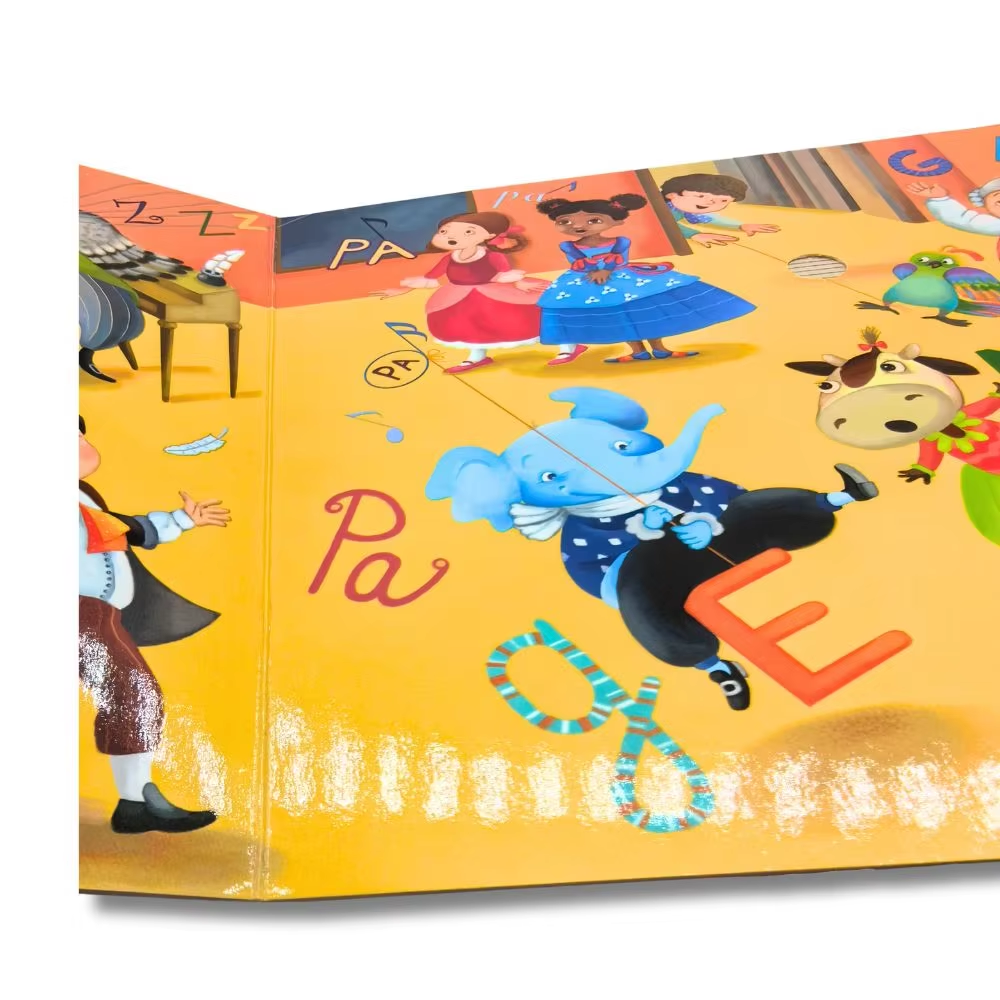
Practical Considerations for Launching a Sound-Integrated Custom Book
Balancing Cost, Battery Life, and Scalability in Small-Batch Custom Book Manufacturing
Small-batch production shifts cost emphasis toward fixed tooling, module verification, and setup time. While button-activated chips, membrane switches, and low-power audio ICs often have minimum order quantities, unit costs decline meaningfully with volume. Battery life serves as both a functional and design lever: standard coin-cell configurations can support hundreds of activations, but removable battery compartments must withstand repeated handling by young children. Sound apertures in the back cover require careful sizing—large enough for clarity, yet structurally sound. Shipping constraints also affect scalability: many carriers restrict air transport of battery-equipped books, requiring sea freight and extending lead times by weeks. A pre-production verification module helps validate button placement, spacing, and interference risks before committing to full runs. For modest batches, standardized modules and snap-in battery trays reduce cost and simplify rework; custom enclosures should be deferred until volume justifies dedicated tooling investment.
FAQ
Q: What technologies are used to integrate sound modules in custom books?
A: The core technologies include flexible printed circuits (FPCs), button-activated audio chips, and low-power audio ICs. These components ensure flexibility, durability, and high-quality audio performance.
Q: How do sound modules in custom books ensure child safety?
A: Sound-enhanced books must meet ASTM F963 and EN 71 child-safety standards, which regulate sharp edges, battery security, flammability, and sound-level thresholds.
Q: What triggers are available for activating sounds in custom books?
A: Common triggers include press icons, slide triggers using conductive traces, and lift triggers activated by light sensors.
Q: How do sound-enabled pages contribute to child development?
A: Sound books enhance vocabulary retention in children aged 18–36 months by combining audio, visual, and tactile stimuli for improved memory and word recognition.
Q: What are the key considerations for small-batch production of sound books?
A: Important factors include managing fixed tooling costs, ensuring battery safety, optimizing battery life, minimizing unit cost through volume, and validating module designs before mass production.