EN
EN


Whether you're an independent author, a brand, or an educational publisher, understanding the custom book printing process helps you make informed decisions and avoid costly mistakes.
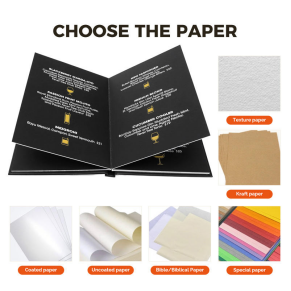
Coated vs. Uncoated: Coated paper (128–200 gsm) has a sealed surface ideal for image-heavy books like art books and illustrated children's titles. Uncoated paper offers a natural feel and superior readability for novels and academic texts.
Children's Books: Board book pages (300–400 gsm grey board) resist tearing and chewing. FSC-certified paper ensures eco-friendly, responsibly sourced materials.
Weight: Higher gsm means thicker, more opaque pages. Use heavier paper for prestige editions, lighter paper for mass-market paperbacks.
CMYK printing layers Cyan, Magenta, Yellow, and Black inks in precise dot patterns to reproduce full-colour images.
Color Psychology: Warm tones (red, orange, yellow) stimulate energy; cool tones (blue, green) promote calm. Especially important in children's publishing.
Pantone Spot Colours: Pre-mixed inks applied as solid layers for absolute brand colour consistency across print runs.
Proofing: Digital proofs are fast and affordable; press proofs offer maximum accuracy for premium publications.
|
Binding Type |
Best For |
Key Advantage |
Page Range |
|
Perfect Binding |
Novels, catalogues |
Professional spine |
40–400 |
|
Saddle Stitching |
Magazines, brochures |
Low cost, lays flat |
8–64 |
|
Spiral / Wire-O |
Cookbooks, planners |
360° fold-back |
20–300 |
|
Case Binding (Hardcover) |
Premium editions, children's books |
Maximum durability |
20–800 |
|
Board Book |
Toddler books |
Tear-proof, child-safe |
10–30 spreads |
Hybrid binding — e.g., spiral interior with hardcover case — combines durability with lay-flat convenience, popular for activity books and cookbooks.
Lamination: Gloss for vibrant, eye-catching covers; matte for sophisticated, low-glare finishes; soft-touch for a suede-like feel.
Foil Stamping: Metallic foil (gold, silver, copper) heat-pressed for premium reflective lettering.
Spot UV & Embossing: Spot UV adds glossy raised highlights on specific areas; embossing/debossing creates 3D tactile depth.
Dust Jackets & Belly Bands: Dust jackets protect hardcovers and add display space; belly bands offer cost-effective promotional messaging.
For children's books, safety is a legal requirement enforced by international standards:
Ink:
Physical Safety:
Standards:
Heavy Metal Testing:
|
Stage |
Duration |
Key Tasks |
|
Prepress |
2–4 days |
File review, colour calibration, plate making |
|
Press |
3–7 days |
Digital (fast, <500 copies) or offset (higher quality, 1,000+ copies) |
|
Post-Press |
3–5 days |
Cutting, folding, binding, laminating, special finishing |
|
Quality Control |
1–2 days |
Random sampling for colour, binding, finish |
|
Shipping |
5–10 days (air) / 20–40 days (sea) |
Air for speed; sea for bulk cost savings |
Submit print-ready PDFs with embedded fonts and correct bleed to minimise prepress delays.
Custom book printing is a collaborative process. Clear communication on specifications, thorough proofing, and realistic timelines produce the best results.
With over 20 years of OEM printing experience, CM Printing delivers quality from single prototypes to 50,000-copy runs.