 EN
EN

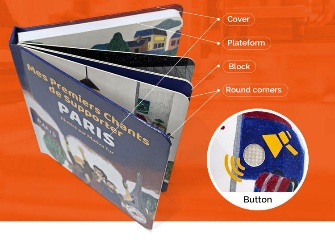
The Rise of Multimodal Reading: Merging Print and Audio Book Experiences
Phenomenon: Growing Demand for Interactive and Accessible Reading Formats
More teachers and families are turning to books that combine printed text with audio options these days because kids learn in so many different ways. Kids who struggle with vision issues, dyslexia problems, or just find it hard to focus benefit greatly from having the story read aloud while they follow along with the pages. Parents with packed schedules have become big fans too - according to National Literacy Trust data from last year, around 6 out of 10 parents use audiobooks while stuck in traffic or doing housework to make sure their children still get some reading time. The combination works wonders for little ones starting out with reading. When kids can actually touch the pages and hear the words at the same time, their brains connect better with the material. Schools across the country are noticing this effect too. Classrooms that incorporate these dual format books see about 40% more student participation compared to traditional methods. While implementing this approach does require some investment in technology, educators believe it's worth the effort since it helps accommodate different learning styles and fits into our fast paced world where everyone seems to be constantly on the go.
Principle: How Dual-Coding Theory Enhances Learning Through Audio-Visual Integration
Dual-coding theory, pioneered by Allan Paivio, demonstrates that combining verbal (audio) and non-verbal (print) inputs creates complementary mental representations. When children see text while hearing narration, neural pathways for word recognition and comprehension strengthen simultaneously. This integration yields measurable benefits:
| Learning Aspect | Text-Only | Text+Audio | Improvement |
|---|---|---|---|
| Vocabulary Retention | 58% | 82% | +24% |
| Reading Fluency | 45% | 71% | +26% |
| Comprehension Depth | 63% | 89% | +26% |
(Source: Journal of Educational Psychology 2023 meta-analysis of 42 studies)
Cognitive load reduces as auditory processing supports visual decoding, freeing mental resources for inference and analysis. For language learners, hearing pronunciation while seeing spelling accelerates pattern recognition, making multimodal reading consistently more effective than single-format approaches across age groups and abilities.
Synchronizing Text and Audio for Improved Comprehension and Fluency
Cognitive Benefits of Simultaneous Reading and Listening in Language Acquisition
Reading along while listening engages several parts of the brain at once, which is basically what dual coding theory is all about. This helps people remember things better and makes it easier to decode words. When students look at written words while hearing them spoken aloud, their brains get information through both eyes and ears. This practice really boosts phonological awareness, repeats vocabulary naturally in context, and shows how words should sound when read out loud. Research indicates that combining these methods can boost reading fluency significantly compared to just reading alone. Kids who struggle with reading, especially those with dyslexia, benefit greatly from this approach. The audio support takes pressure off their working memory so they can concentrate on understanding what's being said instead of getting stuck on individual words. This builds important literacy skills over time without holding back their ability to eventually read independently.
Design Strategy: Aligning Print Layout with Audio Cues (Timestamps, Visual Markers)
Effective synchronization requires intentional design pairing printed text with audio cues:
- Visual Anchors: Subtle icons or color highlights at key narration points guide readers without disrupting flow.
- Temporal Alignment: Matching paragraph breaks to natural 3–5 second audio pauses prevents cognitive overload.
- Interactive Elements: Clickable timestamps allow targeted replay of complex sections, reinforcing understanding.
Studies show that when learning materials have synchronized visual and auditory cues, students tend to understand things better than when these elements don't match up. The improvement rate is around 28 percent according to some research findings. Young learners benefit especially from texts formatted rhythmically, where sentences get broken down into smaller phonetic parts. When this approach works together with narration at just the right speed, kids pick up reading skills faster. However there's a catch for designers working on these materials. Too many helpful hints can actually slow down progress because children start relying too much on them instead of developing their own decoding abilities. Good design practices suggest using special markers only where they really count, like during tricky transitions between ideas or when dealing with longer words that have multiple syllables. This selective approach helps build confidence over time rather than creating dependency on external aids.
Supporting Literacy Development Through Audiobook-Print Pairing
Case Study: Scholastic's “Read & Listen” Series Boosts Grades 3–5 Comprehension by 22%
The Read & Listen series from Scholastic combines regular books with recorded narration and actually worked pretty well in real classrooms. Teachers saw about a 22% boost in how well kids understood what they read when they tested it out in 50 different third through fifth grade classes. The whole thing is based on something called dual coding theory, which basically means our brains get better at processing language when we see words and hear them at the same time. What made this work so well? The books had special colored markers that lined up with specific parts of the audio recordings. The narrators spoke at a pace that matched most students' reading speed, not too fast, not too slow. After each session, there were activities where kids connected what they heard with what was written down. Classroom teachers noticed something really interesting too. Students who struggled with reading showed massive improvements. Around 78% of them made fewer mistakes when decoding words after using this method repeatedly with support. This proves that combining different senses helps kids remember vocabulary better and think more deeply about what they're reading.
Balancing Support and Skill Development: When Audio Scaffolding Helps or Hinders Decoding
Audio support works best as temporary help rather than something students rely on forever. For growing readers, it really shines when dealing with tricky sentence structures or words they don't know yet. It helps them hear how sentences should flow naturally and builds their ability to read longer passages without getting tired. But here's the catch: if kids just listen passively without actually looking at the text themselves, their understanding doesn't improve much over time, and they miss out on learning how letters work together properly. The smart way to use audio support is gradually reducing its presence as students become more confident readers, letting them take ownership of their reading journey while still having that safety net available when needed.
| Support Level | Appropriate Use | Risk Factors |
|---|---|---|
| High | Early learning stages, dyslexia intervention | Reduced orthographic processing |
| Moderate | Challenging texts, fluency building | Delayed independent decoding |
| Low | Review sessions, enjoyment reading | Diminished self-correction skills |
Educators should gradually reduce audio reliance as decoding confidence grows, using formative assessments—not assumptions—to determine readiness for unaided reading. Strategic pairing thus builds literacy foundations while safeguarding against skill atrophy.
FAQ
What is multimodal reading?
Multimodal reading refers to the integration of print and audio experiences to enhance comprehension, retention, and engagement in reading materials.
How does dual-coding theory relate to multimodal reading?
Dual-coding theory suggests that merging verbal (audio) and non-verbal (print) inputs strengthens cognitive processes, aiding in better word recognition and comprehension.
Can multichannel reading aid students with dyslexia?
Yes, children with dyslexia benefit from audio-print pairings as it alleviates pressure on working memory, aiding in word recognition and comprehension.
What are visual anchors in multimodal reading materials?
Visual anchors are subtle icons or color highlights in text that guide readers alongside audio cues without disrupting the reading flow.
Is audio support meant to be a permanent supplement in reading?
No, audio support is meant to be temporary, gradually reducing as students gain confidence in their decoding skills.